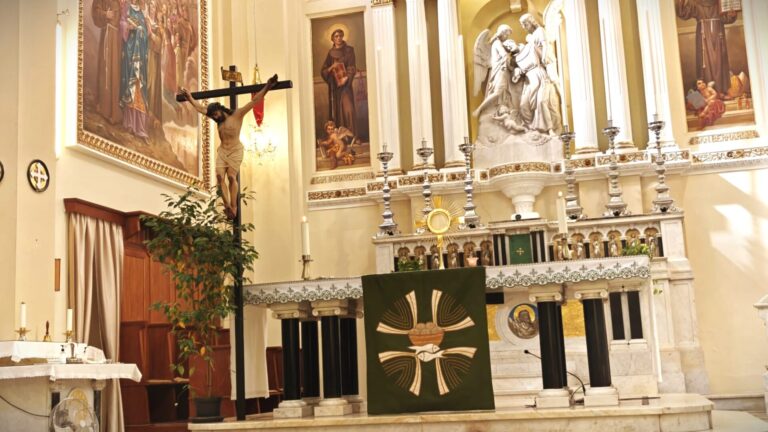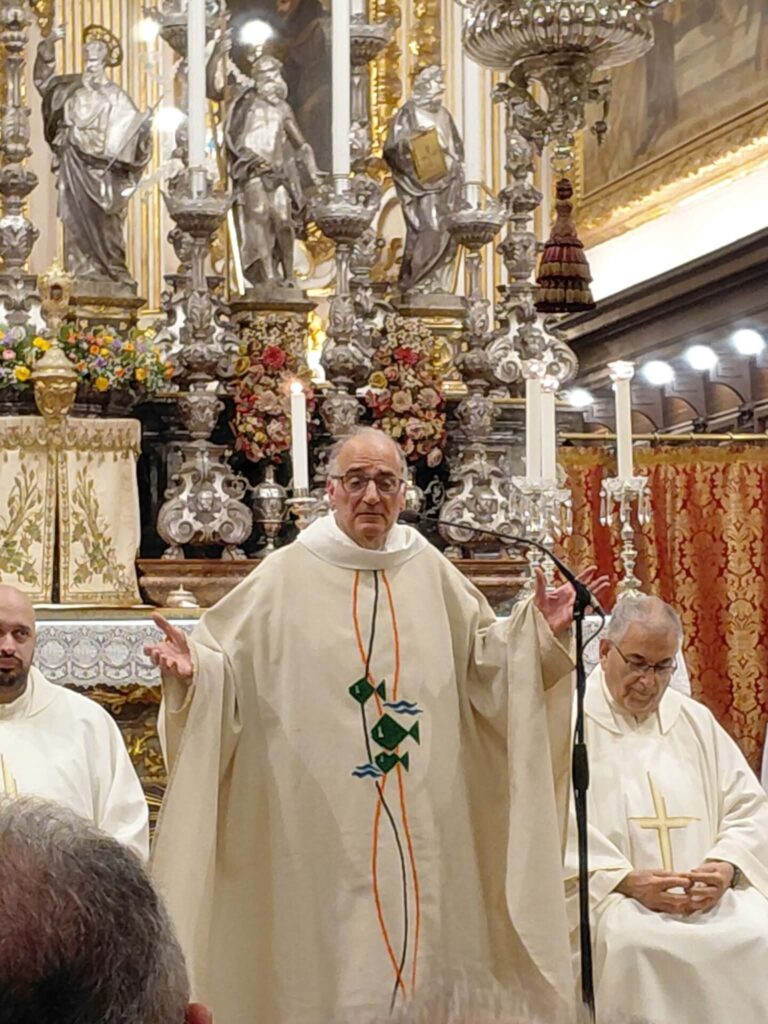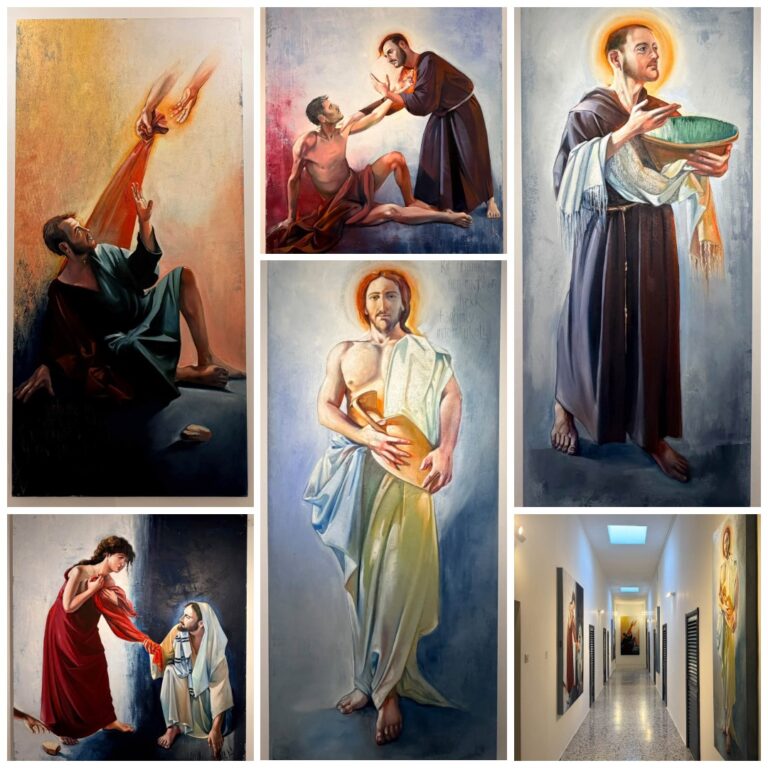
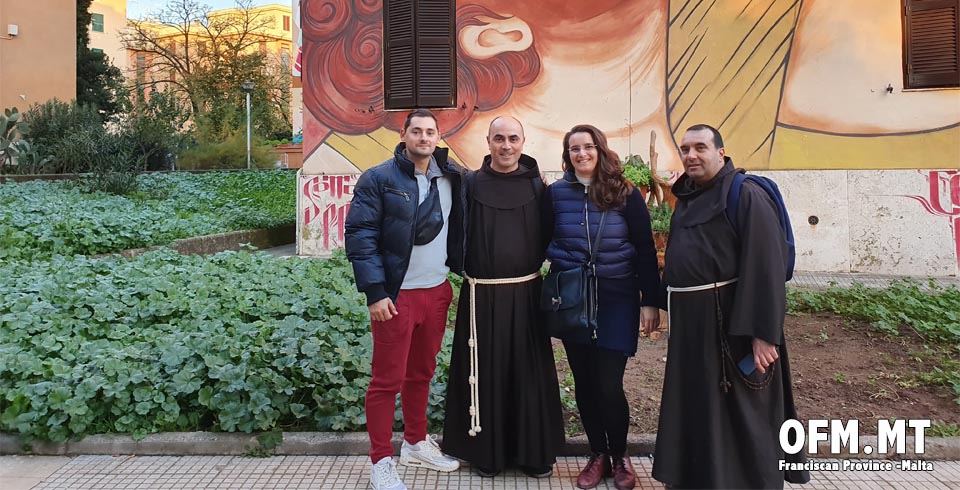
The weekend in Rome organised by the Conference of Friars Minor of Italy (COMPI) starting on the 29th of November, 2019 in the The Pontifical University ‘Antonianum’ was based on Pope Francis’ encyclical ‘Laudato Sí’, giving life to St Francis’ views of beauty, fraternity with all of creation and Earth being our mother and sister. The weekend was full of input sessions and discussions on integral ecology where St Francis views were seen as solutions to today’s challenges of environmental degradation, decrease in the quality of life, increase in poverty, increase in the refugee population and immigration through creating healthy human societies that promote beauty, cultural diversity, dignity and justice for all across generations.
The
weekend was for youths who, in their own way, all are potential seeds that can make
a difference and bring about positive change in their workplace, their home and
their locality. The format of the weekend was partly theoretical and partly experiencial
in the form of visits to organisations that are helping the poor and support the environment. The weekend workshop challenged the
participants’ values and persective for a shift in paradigm, a deep change in
the way we live through an increase in awareness of the interconnectedness of
all.
One
of the perspectives that was challenged was the anthropological. The way modern
man has lived has given rise to an increase in individualism, self sufficiency,
gender issues and disconnectedness from nature. The way education and modern
culture has been developing created a gap between humanity and nature. By
living the perspective that man is at the centre of creation, man’s
relationship with nature has been distorted and has put him in a position to
control creation, which resulted in man misusing and destroying natural
resources, and simplifying the relation with nature to that of consumerism and
market goods.
Another
challenge posed was a theological one. Apart from the destruction of the
relation of man with nature, western modern man has also a distorted way of
perceiving God. Our present ecological crisis will get worse if we do not
reject the axiom that nature has no reason for existence other than that to
serve man. Therefore the perspective challenge consists of understanding that
if we are to love one another, we are also to love and take care of what God
created, since taking care of nature – our common home – is taking care of others.
A question was also posed as to why protect indinenous people and the Amazon in
particular. Given that the Amazon supports global common life including the
quality of air we all breath and the amount of fresh water on our planet, then it
is up to all of us to protect and support this region. The indigenous people’s
culture respects the Amazon and nature in general, and given that modern man
has a capitalist mindset where nature is an object of manipulation and is used
to accumulate material wealth, mediation between the two cultures becomes
important for understanding the need of returning to the right mindset and have
humanity as part of and not the centre of creation. This is the change in
paradigm that modern man has to go through to be able to solve global issues. Unlike
globalised, international companies that promote the ‘colonialist way of
creating economies’ (‘thinking globally and acting locally’), integral ecology
challenges us to start ‘thinking locally and acting globally’. In this new
paradigm, local communities such as indigenous tribes in the Amazon whose
lifestyle embraces the care of nature, can be respected and we can also learn
from them to apply their knowledge and wisdom in order to address and act upon global
issues.
Just
like God created and is the father of everything, thus making us humans brothers
and sisters with every other human and creature on earth, ‘Madre terra’ is the
mother figure, just like Mary the mother of Jesus. She is a mother of all, and a representation of the importance of the
feminine for nurturing and upholding humanity, an idea that has been in the
past shunned out in the post modern and modern society.
Through
discussions and experiential learning in various social organisations, integral ecology was presented not as one option but the only option and path humanity must thread upon
in order to have healthy political and
economic systems supported by the right spiritual
insight that integrated all cultures and created a balance between man, culture
and the environment. The weekend workshop was an enriching experience on all
levels, also making one realise that the beauty, joy and happiness that was
shared in the group and the places visited are also a requirement for humanity
to realise that the sacredness of life is in time, in the moment. A big thanks to the franciscan friars of Italy for
inviting us over to this great initiative, for which we were also accompanied
by Fr Loreto Zerafa OFM and Fr Mark Ciantar OFM.
The
experiential part of the weekend seminar included visits to social
organisations such as ‘Emmaus’, where environmental and social needs are met
by recycling unwanted material such as paintings, furniture and jewellery for
reuse. A
visit to ‘Comunità Sant’Egidio’ highlighted the fundamental importance of
cultivating genuine friendship relationships with the excluded.
Sarah Faith Azzopardi, Leander Duca, Malta.